Lessons from Little Tibet
Reflections on presence, practice, community, and what the Himalayas taught me about paying attention.
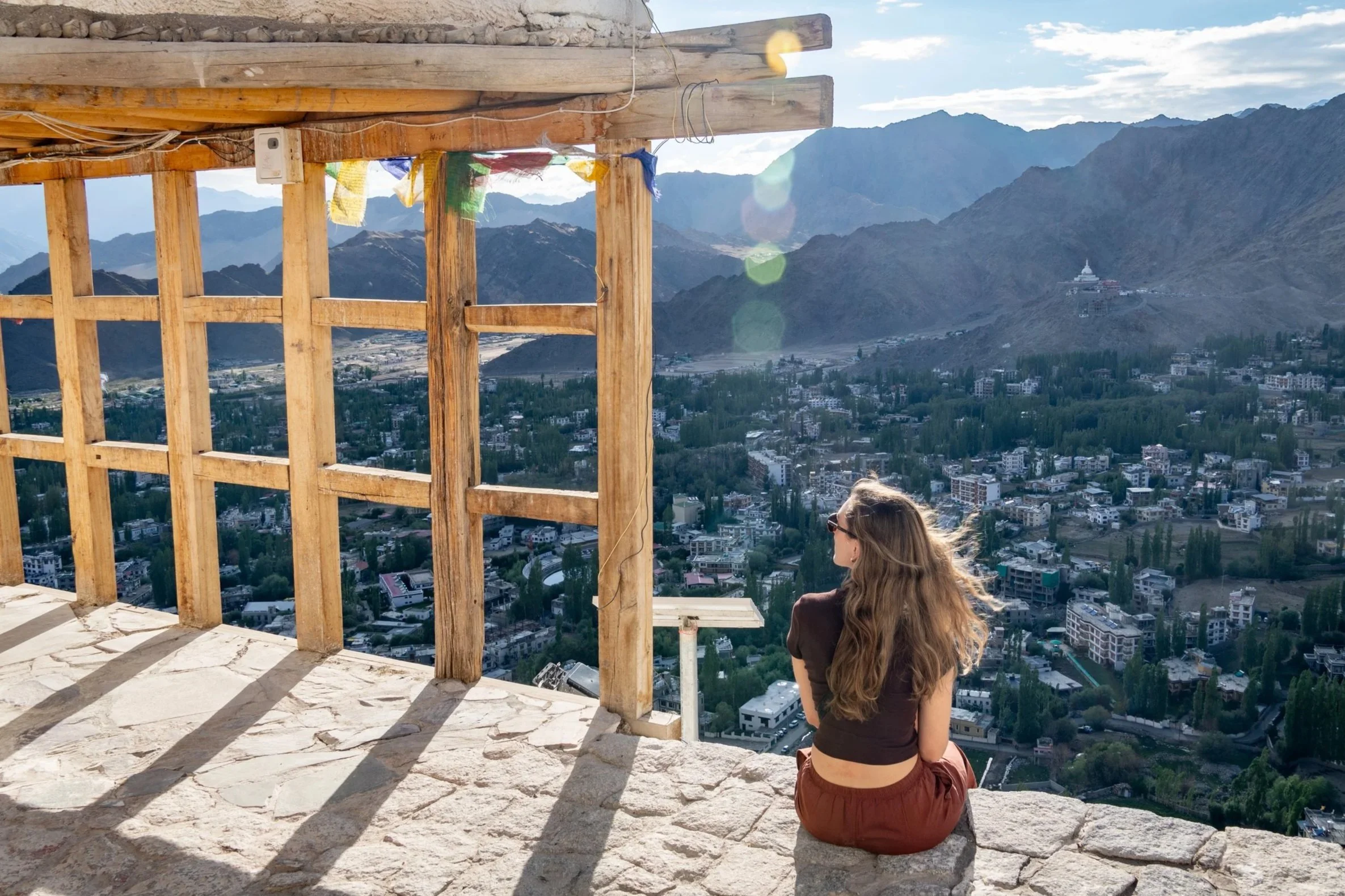
I've been slowly putting together this reflection since returning home from Ladakh six weeks ago. Then came the heartbreaking news of devastating floods across the Himalayan region.
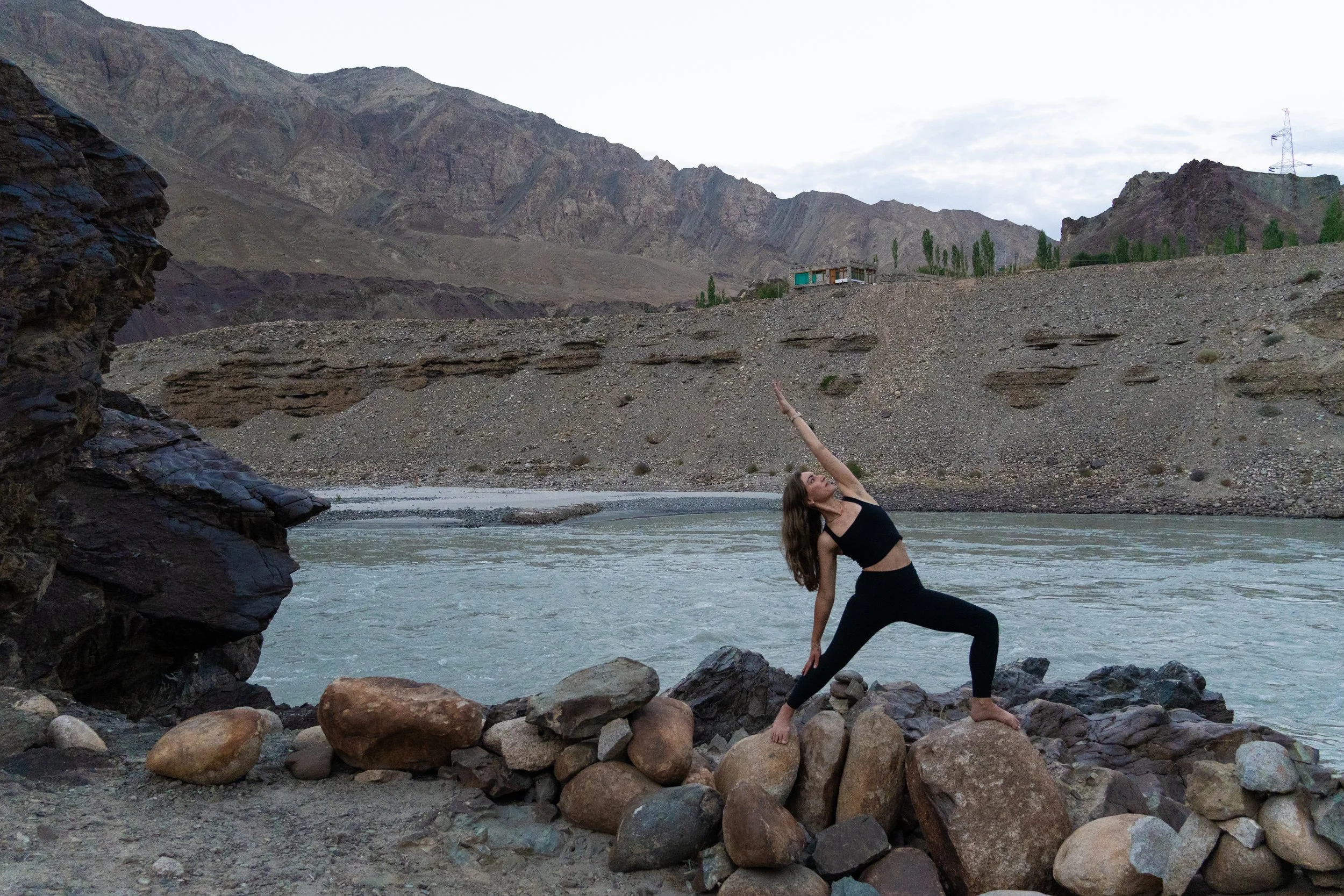
For several days of our retreat, we stayed along the Indus River, practicing yoga to the sound of moving water and watching the afternoon light dance across its surface. The river became our teacher—offering lessons about flow, trust, impermanence, and letting go.
These mountains, glaciers, and rivers aren't simply beautiful backdrops for those of us fortunate enough to visit them. They are powerful natural forces, inseparable from the lives of the people who call the Himalayas home. There isn't a tidy spiritual lesson to draw from that. Only humility, and a deeper reverence for this extraordinary part of the world.
So, with that held close, I still want to share what Ladakh offered us.
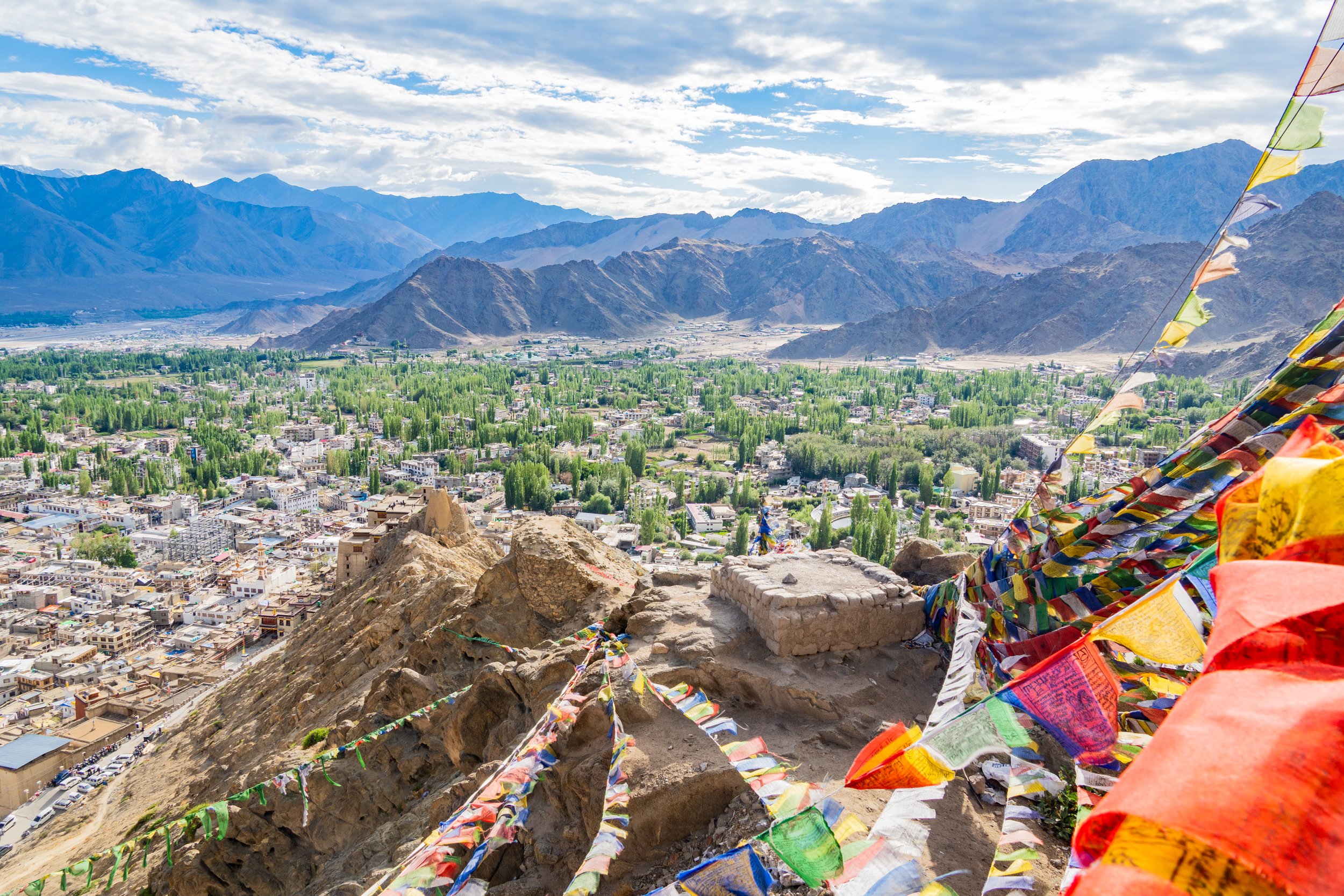
Beyond the photographs—the impossibly blue skies, ancient monasteries, prayer flags moving in the wind, and the Indus winding through the valley—our journey invited us to pay closer attention to life right now. Some lessons emerged through yoga. Others were inspired by Buddhist teachings. Many came simply from being together in community.
Six weeks later, these are the ones I'm still carrying.
01 — BEGINNER’S MIND:
Stay Curious.
One of our first practices in Ladakh began with a simple invitation: Notice.
We had arrived somewhere radically different from home. The landscape, altitude, architecture, and rhythms of the day were unfamiliar.
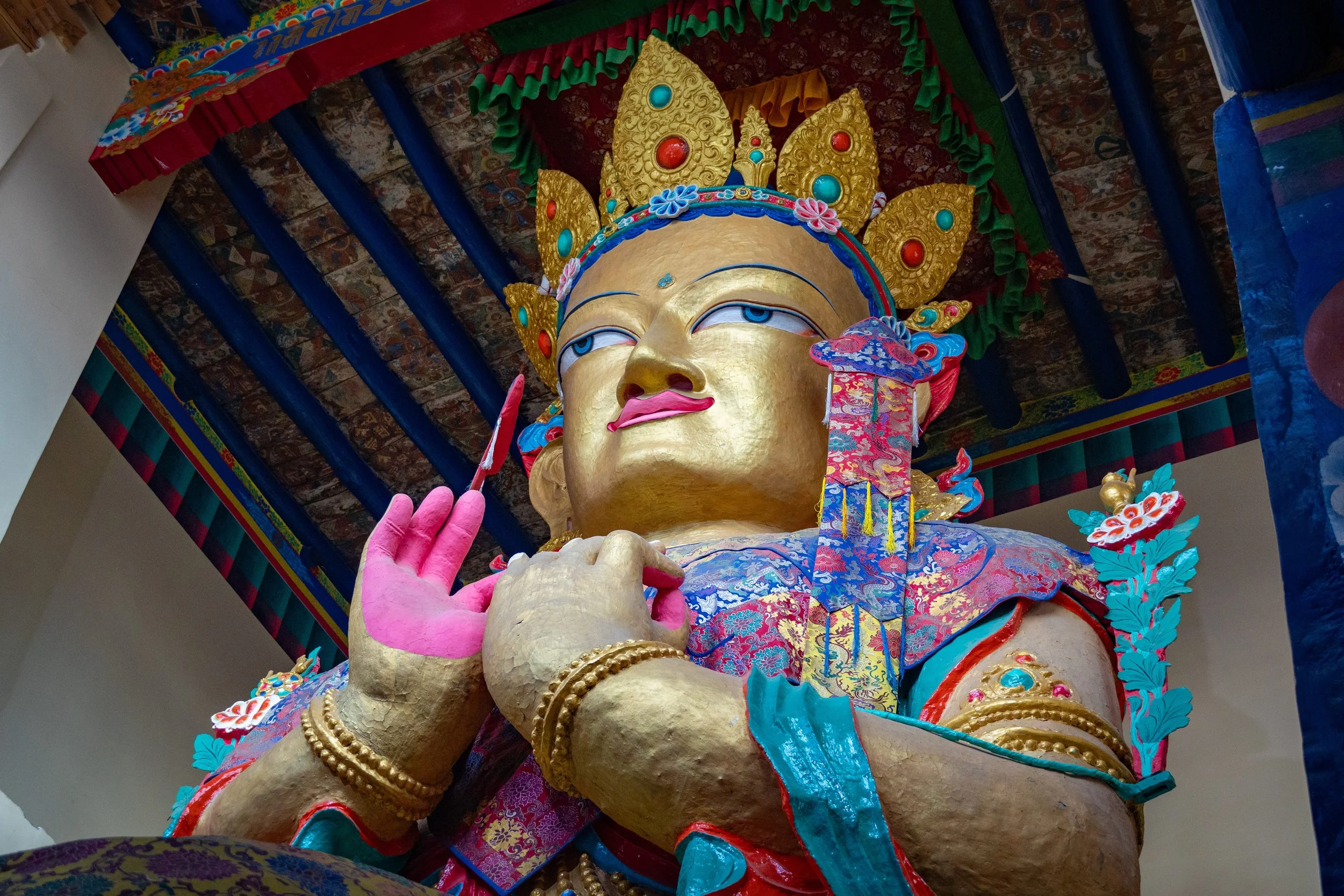
Travel has a wonderful way of disrupting what we think we know. On the mat, we explored beginner's mind: meeting even familiar things with curiosity rather than assumption. How does this pose actually feel today? What does my body need in this moment? What am I noticing that I might normally overlook? Then we carried that curiosity beyond our practice—into monasteries, meals, conversations, and encounters with ways of living different from our own.
We spend so much of our lives believing we already know. Beginner's mind asks us to look again. Perhaps that's one of the great gifts shared by travel and yoga: both remind us how much there still is to discover when we're willing to slow down and pay attention.
02 — YOU ARE THE SKY:
Make space for weather.
Ah, the skies in Ladakh. The clearest blue and the most beautiful dreamy clouds. Against the stark Himalayan landscape, they are impossibly vast.
During one morning practice, I called upon my favorite Pema Chödrön quote: “You are the sky. Everything else – it’s just the weather.”
We explored awareness as the open sky, while our thoughts and emotions move through it like weather. Some days are clear. Some are cloudy. Sometimes a storm rolls through.
The practice is to remember that the weather is always changing and the open sky remains steady underneath. This isn't about bypassing what is painful. Awareness gives us enough space to be with what is here without immediately becoming consumed by it. There will still be grief, uncertainty, joy, frustration, change, and everything in between. Practice can help us remember the spaciousness that holds it all. To become the observer of the weather in our lives.
03 — THE RIVER FLOWS:
Pay attention to what is moving.
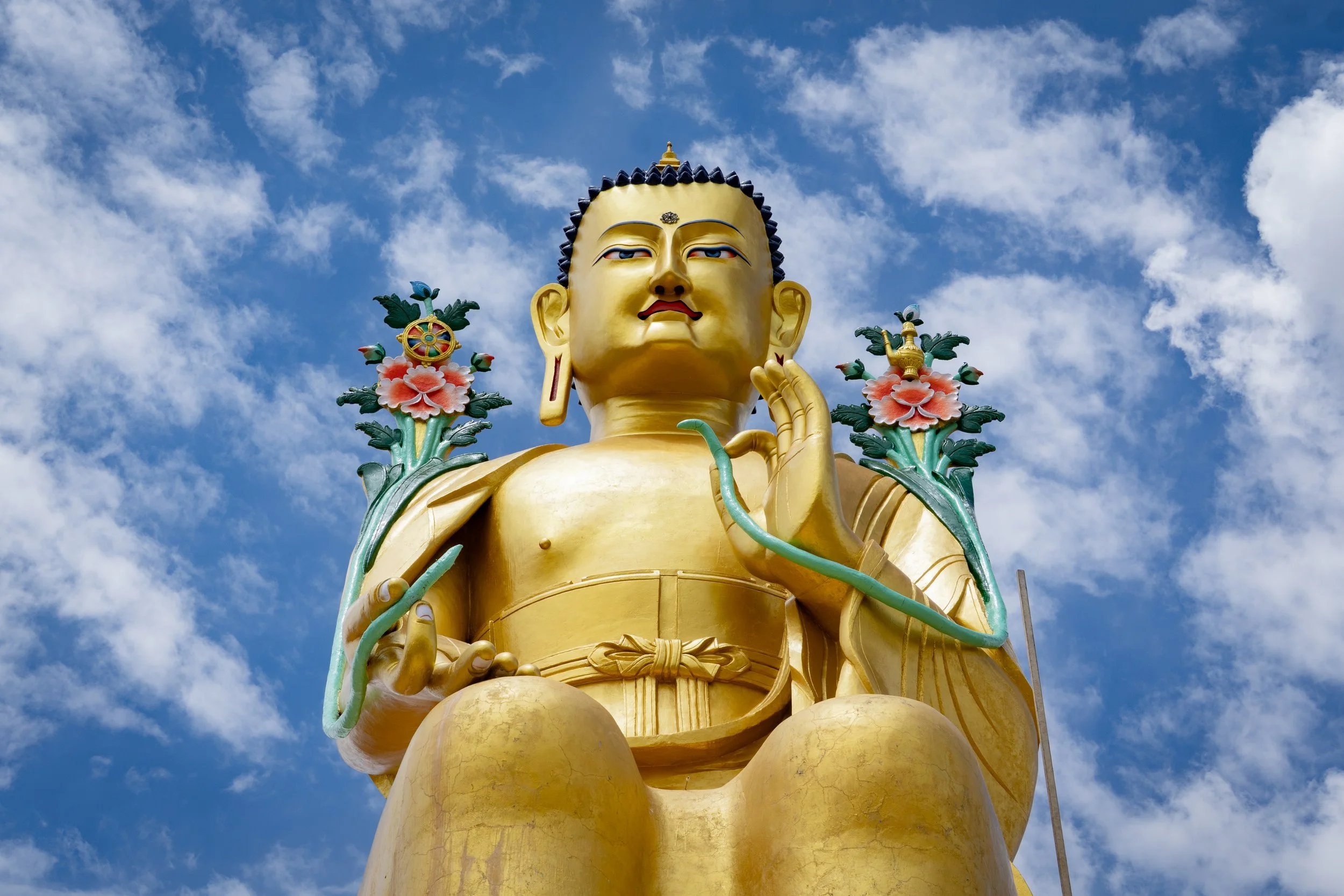
For several days, the river was our companion. We practiced above it, watched it wind through the landscape, and some of us even ventured to the world’s highest rafting point to flow down its current.
At the time, I thought mostly about what the river could teach us about letting go. A river doesn't hold onto the water that has already passed. It meets the landscape as it comes. It bends, changes course, and continues.
I still find wisdom in that image. But recent events have reminded me that rivers aren't only metaphors. They sustain life, shape landscapes, and possess a power far beyond our attempts to control them.
So perhaps what I'm carrying from the river now is a simpler invitation: Pay attention to what is moving. To what is changing. To what we're trying to hold onto. To what is outside our control. There is beauty in letting go and allowing space for what is coming downstream to meet you.
04 — THE MIDDLE WAY:
Balance effort with ease.
One of my favorite Buddhist stories is the story of Sona.
Sona was a monk who practiced and practiced, yet he could not attain enlightenment. Frustrated, he considered giving up and returning to his former life. Knowing Sona's background as a talented musician, the Buddha approached him and asked how he would tune his instrument. Sona replied that the strings would snap or be too tense if made too tight. If too loose, no music would come out. He agreed that the best sound came when the strings were tuned neither too tight nor too loose.
The Buddha explained that spiritual practice and meditation work the same way. If you push yourself with too much strain, pressure, and over-effort, you will burn out. If you are too lazy or lax, you will make no progress. The Middle Way–steady and mindful effort offers the best path toward growth.
On our mats, we explored this physically: effort and ease, strength and softness, stability and freedom. Too much effort and we become rigid. Too little and we lose the integrity of the shape. Somewhere between the two, we find responsiveness.
And then we took the question off the mat: Where in my life am I holding too tightly? Where have I become too loose? What might my Middle Way look like?
I love that yoga gives us somewhere to practice these questions before we have to live them.
Balance isn't a fixed destination. We listen, adjust, soften, engage, and begin again. Like tuning an instrument, it's a lifelong conversation.
05 — PRACTICE IS AN ANCHOR:
Keep showing up.
Ladakh reminded me that we don't only need our practice when life feels peaceful. We need it when things are changing.
Travel disrupts our routines. Our bodies feel different. We encounter discomfort, uncertainty, beauty, exhaustion, and awe—sometimes all in the same day. And throughout our journey, we kept coming back to the mat.
Some mornings we moved through strong, expansive practices. Other days called for something quieter. Sometimes we moved. Sometimes we sat together and followed the fading sound of a Tibetan bell into silence. The practice never required us to arrive feeling a particular way. It simply gave us somewhere to meet ourselves as we were.
I've experienced this again and again in my own life. During pivotal seasons and periods of uncertainty, the consistency of showing up becomes an anchor—not because yoga makes difficult things disappear, but because it creates a little more space to breathe within them.
Perhaps that's why we call it a practice. We return, over and over—not to perfect ourselves, but to practice being present for the lives we're actually living.
06 — WE HEAL IN COMMUNITY:
Find strength in connection.
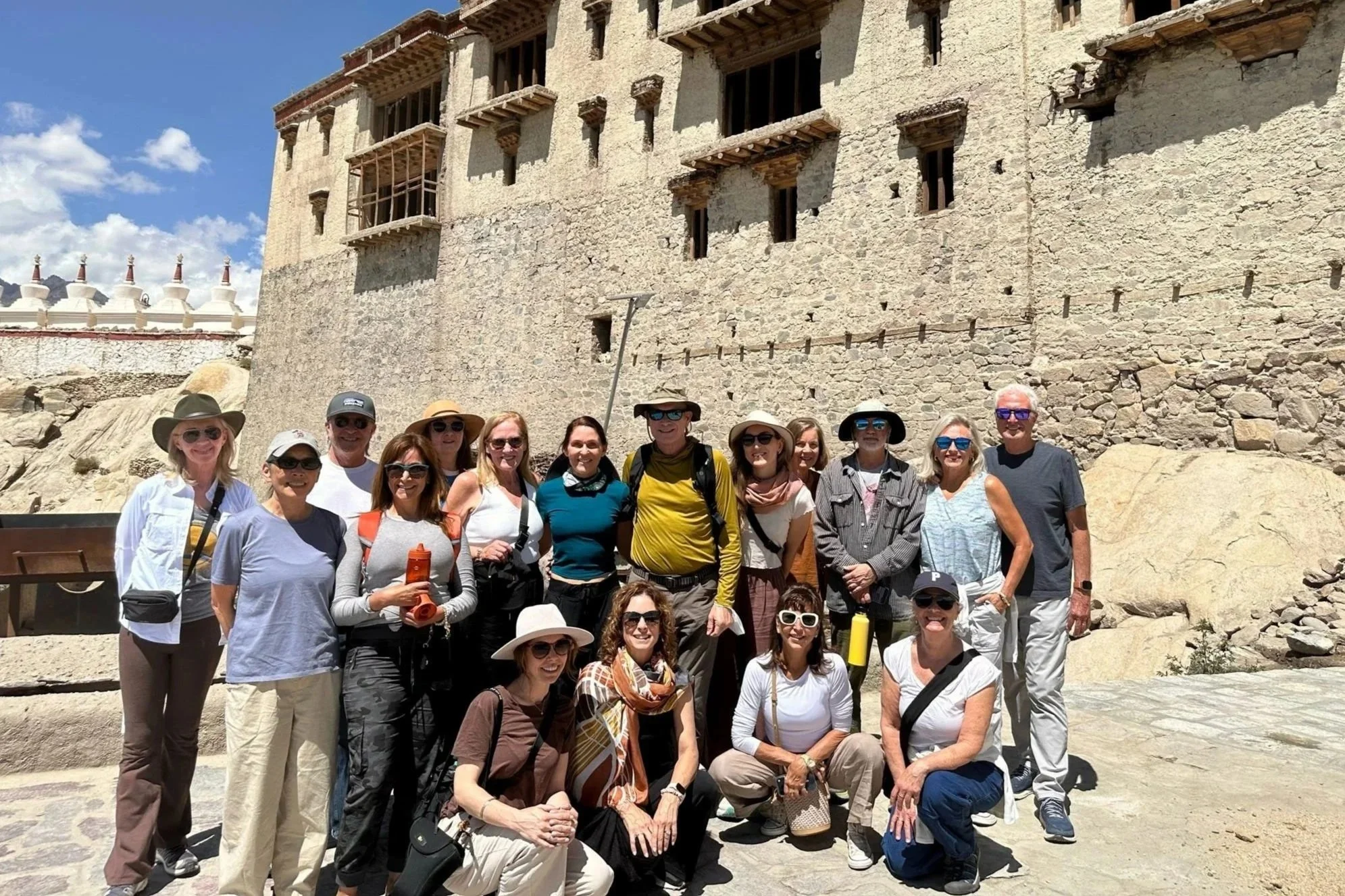
Perhaps the greatest gift of our journey was watching people who arrived from different lives become a community.
We practiced beside one another. Shared meals and long drives. Navigated altitude and unfamiliar places. Listened to each other's stories. Laughed—a lot. People looked after one another. Friendships formed across ages, backgrounds, and places.
We often imagine healing and personal growth as private pursuits: our meditation, our journal, our yoga practice, our inner work. But so much of our wellbeing is relational.
Something happens when we feel seen. When someone makes room for us. When we share honestly and discover we're not alone. When we have enough unhurried time together for real conversation.
Yoga means union. Connection is woven into the practice itself.
I'm profoundly grateful for the community we created in Ladakh. The friendships that began there may ultimately be the most enduring gifts we brought home.
07 — THE HORIZON:
Carry the lessons forward.
I called our journey Himalayan Horizons. For ten days, we were surrounded by extraordinary horizons—mountains unfolding into mountains beneath a sky that seemed to go on forever.
But the most meaningful horizons we crossed weren't geographical.
Travel can widen something within us. We encounter people we might never otherwise meet. We sit in the presence of traditions much older than ourselves. We remember that the way we see the world is only one way of seeing it.
On our first night together, I asked everyone: What brought you to Ladakh?
On our final morning: What will you carry home?
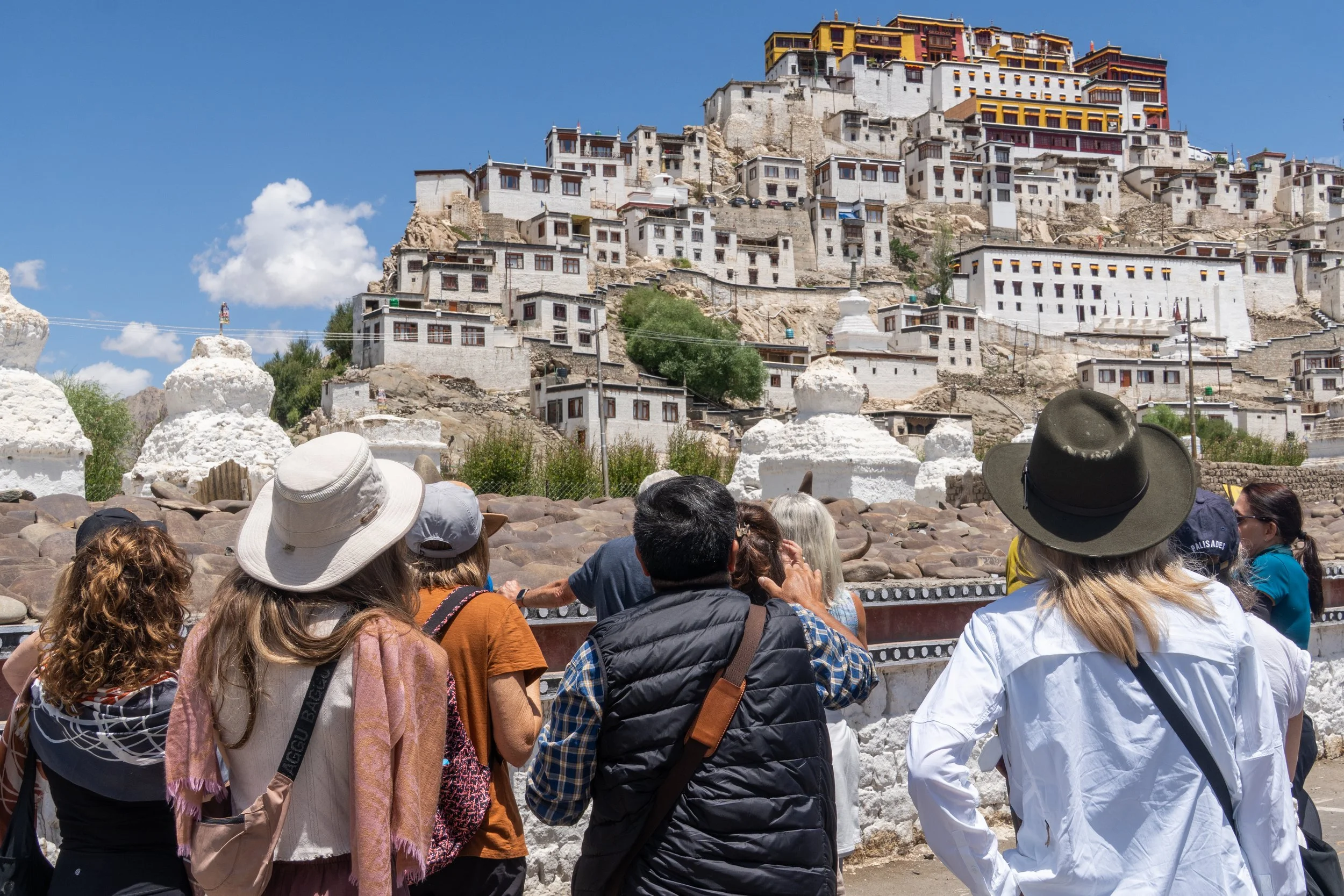
We couldn't take the Himalayas home. We couldn't recreate the sound of monks chanting at Thiksey Monastery or the feeling of standing beneath that enormous blue sky. Those experiences belong to their place and time.
But we could carry what they awakened within us: Curiosity. Perspective. Reverence. Balance. The steadiness of practice. The healing power of community. A renewed capacity for wonder.
Perhaps that's what crossing a horizon can offer us—not an escape from our lives, but an opportunity to return to them a little more awake.
There will always be another horizon. My hope is to cross each one with curiosity and reverence—and to carry what I learn into the way I live, teach, gather, and move through this world.
And I'm so grateful for the community willing to cross them with me.
Supporting Himalayan Communities
As communities affected by the recent flooding face the long work of recovery, I wanted to do something small in return for a region that has given me so much.
I've made a donation to Himalayan flood relief through an organization recommended to me by a Nepali friend. If you feel called to support the communities affected, you can learn more and contribute here: Himalayan Trust.